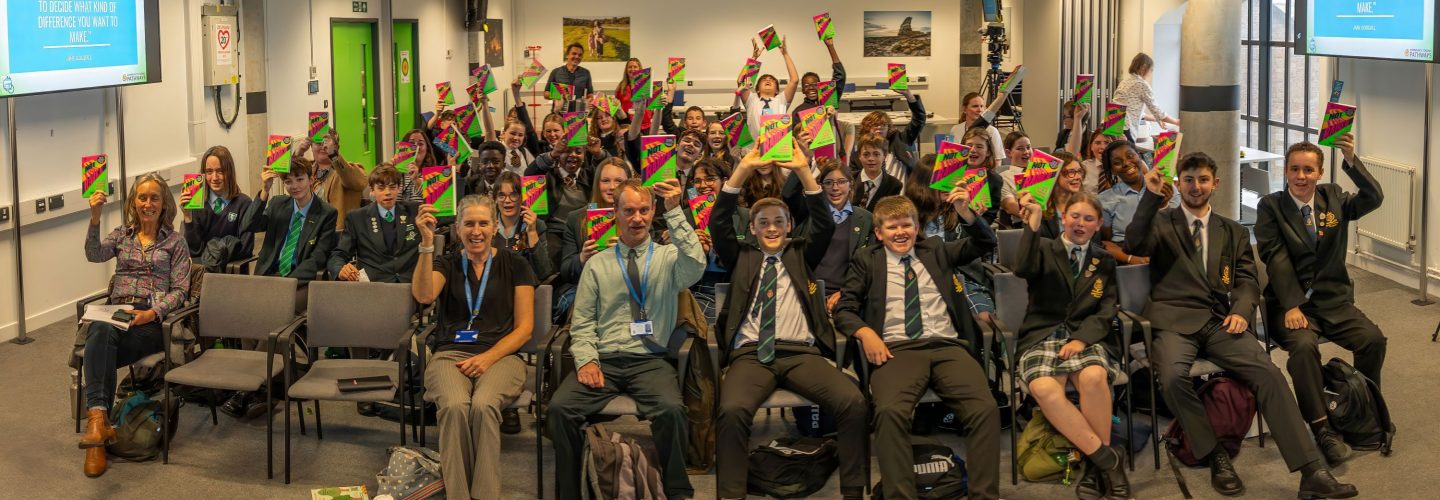
Youth action day 25

OVCA Youth Event

The Big Question

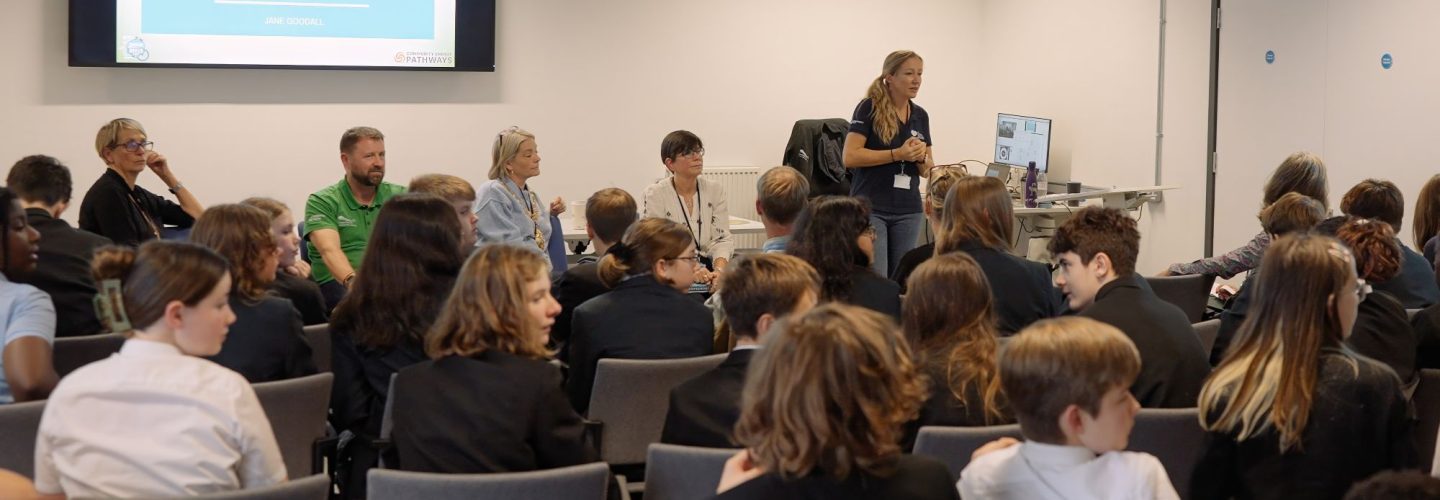
In October 2025, Ouse Valley Climate Action invited students from the secondary schools in the Lewes District to attend an event to meet each other and hear what they are doing to help their school become more sustainable. They also had a chance to ask questions of the teachers, local councillors, and the CEO of South Downs National Park about what else is happening locally to help our environment.

The students had 85 questions in total which we have sent to our MP, councillors, local companies and agencies protecting our environment. Read on to find out what they had to say.

Biodiversity

What protections are there around habitats and areas such as chalk grassland and peat bogs, and do you think they are enough to preserve spaces as important as these?

Jan Knowlson Biodiversity Officer SDNP responds – they are both on the Priority Habitat Inventory, and are considered important habitats, but unless they are within a SSSI I don’t think they have much protection. Both have declined dramatically in recent decades. They are now under better management in most cases, but more needs to be done. You can contact your MP and ask them to support asking the government to provide more protections for natural habitats.

Bagged compost containing peat was banned in 2024 and the government plans to phase out peat in the professional horticultural industry by 2030 and to restore the UK’s peatlands. The RHS and the Soil Association will stop using peat by 2026 and are providing advice to enable others to do so too.

The UK has committed to protect 30% of land and sea for nature by 2030 (30by30), to support the global 30by30 target agreed at the UN Biodiversity Summit (COP15) in 2022. Many conservation groups are pressuring the government to keep to these targets.

What could be done to prevent environmental destruction?

Many things need to change to prevent this. A big problem is that people don’t understand enough about the problem and how we have an impact on the planet. The more people understand influences change to happen. You can help by asking your school to teach more about the issues and how we can help. You could also contact your local council and your MP and ask for their support on issues you care about.

Visit the Schools-Ecolink website for youth projects to join and use your voice.

How are you responding to the reduction of wildlife in this region and how will you prevent further destruction of natural areas?

Nature Recovery for communities – South Downs National Park Authority

The UK protects nature by making strong laws, setting aside protected areas, reducing threats, and working with conservation groups. Endangered species are helped through habitat restoration, legal protection, and special recovery plans. There is always more to be done. There are many agencies such as the South Downs National Park, Sussex Wildlife Trust, and many local groups helping to preserve and improve spaces for nature.

What are they going to do about all the trees being cut in Friston Forest and wildlife losing their homes?

Friston Forest is the largest area of woodland in Sussex, outside Seaford in the South Downs National Park. It is managed by the Forestry Commission, who manage forests owned by the government and also regulate private forest management. It is mostly made of beech trees planted in the 1930’s and 1940’s and because many of the trees are the same age and type, it is not yet the rich mix of habitats that wildlife needs to thrive. The Forest Management Plan (2021–2031) sets out carefully how to make the forest healthier, more diverse, and better for both animals and people.

When managing a woodland, you often actually need to cut down trees so there is a variation of age structure in the forest as different age trees provide different opportunities for wildlife, and the shade they create varies as they grow, affecting what plants and flowers can grow on the forest floor. You can allow areas to naturally regenerate or can plant more species of native tree to create more diversity e.g. cherry and lime. Areas of natural generation are very good for wildlife as naturally created woodlands are much more open and patchier than a plantation woodland, plus and trees are grow further apart so giving more opportunities for wildlife as the area changes.

By expanding open spaces, especially chalk grassland areas, you can create more habitat for rare butterflies such as the Chalk Hill Blue, Silverspotted Skipper and Small Blue. These areas are cut and the grass removed (lowering nutrients and helping wildflowers compete with grasses) like hay or grazed meadows.

By widening woodland rides (up to 40 metres) and creating “scalloped” edges for more sunlight and wildflowers you link habitats together. These green corridors help species move more easily across the forest which is important that species can move and adapt their behaviour as climate change increases temperature and changes weather patterns. As Friston Forest has around 350,000 visitors a year it is key to maintain the trails and paths for people but also because it allows visitors to be directed to certain areas and leave other areas for wildlife (usually furthest away from carparks and paths).

Friston Forest is home to important and protected species, including Hazel dormice, Great Crested Newts, many bats species, Adders, lizards and slow worms. It is also breeding habitat for notable migrant bird species such as Nightingale, Willow Warbler and Black Cap. The Cuckmere Valley also supports migrating birds that pass through or breed in the wetlands such as Cuckoo, Sedge Warbler, Osprey and Honey Buzzard. Maintaining the health of the forest is essential for the health of wetlands in the valley below. Dewponds and ponds are restored in and around the forest for newts and bats. Also critical is maintaining scrub and hedge habitat for dormice and nesting birds and leaving standing deadwood for vital for insects, fungi and holenesting wildlife e.g. some bat species, woodpecker and nuthatch.

These management techniques will in time create a living patchwork of woodland, meadow, scrub and wetland, ideal for a wide range of plants and animals. A more varied forest is a stronger forest both better for wildlife and more able to adapt to the future.

How is the decrease in insects affecting other plants?

Insects form parts of our world’s ecosystems. The decline in insects is upsetting the balance of these delicate structures. As well as being food for other animals, insects aid pollination, they help to disperse seed to aid plants to spread. Insects help with breaking down dying plants to release the nutrients for other plants, insects, animals, and us! Upsetting our ecosystems also leads to an increase in pests and diseases affecting plants and animals.

This article from kids.earth.org explains more.

Could we create a wellbeing garden at school?

Speak to your teachers about this. Signpost them to the Schools-Ecolink website for links to advice and support.

How will you try to increase the population of almost extinct animals?

Natural England has created species action plans to help about 1,000 threatened species, focusing on the most important steps each species needs to survive. naturaleng.blog.gov.uk

The UK aims to create or restore 250,000 hectares of wildlife-rich habitats by 2030.

Better habitats help animals like dormice, water voles, and rare butterflies recover. UK Species Targets

Protected species like bats, great crested newts, red squirrels, and stag beetles—are protected by law. It is illegal to disturb or harm them or destroy their breeding places even by accident. Fines for disturbing or damaging a bat for example can reach up to £5000 Bats and the law – Advice – Bat Conservation Trust.  You need specialist training to survey protected species and need to obtain verified experience to get a licence e.g. Great Crested Newt Licence. Habitats and species of principal importance in England – GOV.UK

You can help by reporting all sightings of animals and plants that you out and about through citizen science apps like Mammal Mapper, Dragon Finder (amphibians and reptiles), Big Butterfly Count. All the data is centralised and can be used to protect more habitats and make corridors.

You can make the space around where you live more wildlife friendly Gardens & Greenspaces | Weald to Waves and join lots of people making a corridor from Nature from the mouth of the Ouse up to Ashdown Forest and over to the Knepp Estate in West Sussex, leading down to the mouths of the of the River Adur and Arun.

Maybe you could volunteer at a local greenspace or environmental Network? Or join some of the bigger groups such as the Wildlife Trusts, RSPB, and WWF who work with the government to protect and monitor wildlife. They can even take the government to court if it fails to act.

How can we add more trees to the big gaps in between the garden and the field?

The Woodland Trust provides free trees for schools. The trees provided are quite small. A variety of native trees and hedging can be purchased cheaply from Special Branch Nursery based in Stanmer Park – www.specialbranchtrees.org.uk

See also answer for question 11

How can we add more variety of wildlife on our school grounds?

By creating stepping stones of shrubs, longer grass and wildflowers that pollinators and birds and mammals can use for food and to avoid predation.

OVCA has visited the 3 Secondary Schools in the coastal strip and written Biodiversity Gains Advice reports that give practical instructions to improve habitats for wildlife. Why don’t you ask for a copy of yours and make a student action plan?

Point your teacher to the Schools-Ecolink website to find advice and support for improving biodiversity on your school grounds.

How is the decrease of rain affecting the plants?

Decreased rainfall affects plants and their environment in a number of ways;

  • Decreased rain leads to less moisture in the soil and this can cause stress in plants. Plants are on average 70% water and you will see plants start to wilt and change colour when they get dehydrated.
  • Most of plants nutrients come from the soil and to absorb this through their roots there needs to be enough water in the soil to allow the roots to take up these up in liquid form.
  • A lack of rain will also affect insect populations, pollinators will die off if not enough water available during dry spells (make a bee drink for your garden, it’s just a dish of water with stones in!) and then less plants are pollinated. Many plants are depended to on pollinators to produce fruit and many with reduce productivity. According to the Earth Trust 180,000 species are dependent on pollinators in the UK, more than 1200 crops are reliant on them. Globally 75% of plants are dependent on pollinators and 35% of crops. 1 out of 3 bites of food comes from pollinators, without which many species including us would not survive.
  • Severe drought will cause plant die off that leave dry material susceptible to wildfires, managing firebreaks in heathlands and forests can help manage this should it occur.
  • Agriculture is responsible for 70% of water usage and also holds part of the solution by changing practices. Wicks Farm in East Sussex is a strawberry farm that received a grant from the government to install and line a 32,000m3 reservoir to hold run off water from the glass houses growing strawberries. This is an example of how we can adapt to climate change. By building the reservoir, the farm has water to grow crops, and also acts as flood protection by holding the water when heavy rainfall occurs and protecting farms downstream that usually flood. The farm has reduced its need for extra water and labour by 50% and increased its productivity by 3.5times, this reduced the food miles for strawberries locally. With time the reservoir will probably become a haven for nature too.

Do you use chemicals in the Southdowns National Park?

Awaiting answer from SDNP

Water

How do you plan on reducing water consumption in schools?

This is a question to ask your school business manager? Can the climate ambassadors at your school support this?

Suggestions of ways schools can save water:

The FREE water check is available to schools in the South East.

They’ll visit your school or business and carry out a full check of all your water appliances. The visit should take no longer than a day. The time it takes depends on the size of your business and the water saving potential. Their experts will:

  • Locate and fix minor leaks on toilets, taps and showers
  • Install water saving devices
  • Recommend other ways you can save, reuse or recycle water

Schools can contact Ben.Coles@groundwork.org.uk to find out more.

Flooding

If flooding is a problem in your school, there are many local SuDS projects including in schools to maybe inspire a school project https://wearetap.org.uk/schools-and-education/

What are you doing about the pollution into the sea and rivers?

Response from Southern Water

Our dedicated Clean Rivers and Seas Task Force are now in the final phase of our Pathfinder programme, which has determined the most effective ways to reduce storm overflow releases, and make sure we get the best results from our next investment cycle (2025-2030).

This year we’ll be scaling up our storm overflow reduction programme considerably, rolling out the most effective solutions from our pilots, including:

Optimisation: working on both public and private infrastructure to reduce infiltration and ensure it’s working as effectively as possible, as well as reconfiguring our permits and existing sites to help us manage more stormwater

 Misconnections: redirecting surface water that’s been misconnected into the foul/combined sewer, which causes the system to become overwhelmed leading to storm overflow releases

Household sustainable drainage systems (SuDS): rolling out ‘slow the flow’ measures at scale on properties across our region to manage roof run-off

Non-household SuDS: targeting large roof areas and car parks with sustainable ‘slow the flow’ measures to significantly reduce surface water run-off

Highway schemes: large amounts of surface water come from public highways, so we’re working with local authorities to influence future designs and improvements to reduce their impact

Early results have been positive. Our sealing work in the Pan Parishes has put an end to noisy and disruptive tankers and over pumping, and a dual-approach upgrade in Cowes on the Isle of Wight has completely stopped storm overflow releases from the local outfall. We’ve optimised our Swalecliffe site to work more effectively, which has reduced storm overflow releases by 36%.

In another example, we’ve worked with the Department of Education to install SuDS, such as raingarden planters and swale drains in nearly 100 schools across the south, removing tonnes of rainwater from school sites every time it rains. The SuDS have managed over 117 million litres of rainwater and groundwater so far.

For further examples and to find out what the Task Force has been up to, please visit our Task Force webpage.

We can’t do it alone

With so much of the network being private and out of our jurisdiction, partnerships are vital for our planned improvements. We need our regulators, the Government, local authorities, and community groups to work together to better manage water in towns and cities. We’ll also need to work closely with customers and business owners, to install ‘slow the flow’ measures on their land.

If you want to find out how you can help slow the flow of rainwater getting into the system, please visit the how can I get involved pages on our website.

How will you improve this in the future?

Response from Southern Water

We aren’t just focusing on the here and now; we’re looking ahead to ensure we’re taking the best steps for future water resilience. Between 2025-2030, we plan to invest at least £700m in storm overflow reduction, which forms part of the business plan we recently submitted to Ofwat.

We have almost 1,000 storm overflows in our region and 50% of these are already hitting the Government’s new 2050 target of releasing 10 times or less a year. Our Clean Rivers and Seas Plan sets out how we’ll tackle the remaining storm overflows that need attention in our region.

We’re prioritising overflows in line with Government and regulatory targets to first reduce the impact on shellfish waters, environmentally sensitive sites, and bathing waters. While we’re also trying to include high frequently release sites, we have a significant number of outfalls going into shellfish areas (The Solent and North Kent), which we’ve been instructed to work on first. By 2035, 75% of our high priority overflows will meet the Government’s 2050 target, therefore, reducing storm overflow releases by an average of 8,000 a year. This represents an 81% reduction in releases in bathing water areas and an 80% reduction in releases in shellfish areas by 2035.

Our plan includes a record investment of £1.5 billion between 2025 and 2035, focusing on delivering long-term solutions that get to the root cause of storm overflow releases. We’ll introduce nature-based solutions in our communities to prevent and slow the volume of rainwater overwhelming the network, combined with making infrastructure improvements to increase our capacity and using wetlands to act as natural treatment solutions.


Lewes District Council is supporting the Rights of the Rivers Charter. This declares that rivers have the right to flow, the right to native biodiversity, the right to be free from pollution. The council along with other local groups such as Love our Ouse are working to support these rights. Read more about it here.

More good news is that councils in other areas have been following the work happening in Lewes and are declaring rights for their own rivers. Read more.

What rules have you put in place to reduce water wastage?

Response from South East Water

To reduce water wastage, we are implementing a multi-billion-pound strategy that balances infrastructure investment with community-led water-efficiency.

Network Investment and Leakage Reduction

We are investing £2.1 billion (2025–2030) to modernise our network and improve drought resilience. Key initiatives include:

  • Active leak management: We spend £40 million annually on finding and fixing leaks. Between January 2025 and January 2026, we repaired 21,600 leaks, a 15% increase over the previous year.
  • Smart technology: We’re rolling out smart meters across our water network, upgrading almost 900,000 meters by 2035. The smart technology will provide customers with close-to-real time data, measure their daily water use, give customers better control over their bills and also help to detect leaks earlier.
  • Infrastructure: Building the Broad Oak Reservoir and a new £39 million water treatment works to secure long-term supply.

Customer Support and Household Efficiency

We encourage our customers to reduce their daily water consumption through:

  • Free resources: Providing water-saving devices (like LeakyLoo™ strips) and seasonal advice via our website, newsletters, and social media.
  • Home water-saving visits: A large-scale project offering free technician visits to assess fittings, repair minor leaks, and install water-saving devices at no cost.
  • Digital tools: Real-time reporting via our AquAlerter platform and efficiency tips through “My Account.”

Education and Community Outreach

We are fostering a culture of water efficiency through targeted partnerships:

  • School programs: Our AquaSmart program combines classroom education with physical site audits, where engineers identify and fix leaks on school grounds.
  • Professional partnerships: We collaborate with councils, housing associations, and water retailers to promote efficiency within businesses, farms, and universities.

Could we be taking water from the ocean for drinking?

Response from South East Water

South East Water has investigated the use of desalination plants to provide future water resources as part of its 50-year Water Resources Management Plan.

A desalination plant at Reculver (Kent) which could provide 30 million litres of water a day by 2044 has been proposed within our latest Water Resources Management Plan. The need for desalination plants, that turn seawater and brackish water into drinking water by removing the salt, is driven by the long-term need to protect and improve the environment. Therefore, a decision on future abstraction reductions will inform future decisions about the extent of desalination schemes that will be needed.

The cost and environmental impact of a desalination scheme mean that it is not always a best value solution for many, but we will continue to work (along with water companies) to investigate and undertake technical and environmental investigations, and the consenting of options, resolving outstanding environmental impact concerns, technology and energy issues over the early stages of our plan, so that such a scheme can be constructed and become operational when needed.

A trial plant was operated at Herne Bay on the north Kent coast and in 2005 we built a small pilot plant at Newhaven, East Sussex.

We tested it for 18 months to see how effective it could be – both technically and environmentally – to turn seawater into drinking water on a larger scale. Some results were encouraging.

Find out more here: www.southeastwater.co.uk/futurewater

To the Environment Agency: What are you going to do to stop water companies dumping sewage in the water? What needs to happen to stop pollution getting into our water? Is money a problem for funding projects?

Response from the Environment Agency

The Environment Agency has significantly strengthened our approach to water regulation, backed by more staff, better data and systems, with stronger enforcement powers. We are committed to hold water companies to account wherever they fall short.

Real, measurable change is happening. This year we are on track to complete 10,000 inspections of water company assets — a tenfold increase on previous years. Since 2015 we have concluded 69 prosecutions against water and sewerage companies, securing fines of over £153 million.

Through our requirements, water companies have installed event duration monitors on all storm overflows in England. These monitors report when a spill starts and when it stops.

We publish summary data every year so everyone can see what is going on and use millions of lines of data to target our enforcement activity. This data has informed the record investment through the Water Industry National Environment Programme (WINEP).

Our focus is solely on protecting people, nature and water quality and we act independently from water companies. We know that communities want clean rivers and beaches. We share that ambition. We are building a tougher regulatory culture and increasing our capability to identify, respond to and ultimately prevent pollution before it causes harm.

We will continue to hold water companies to account, pursue enforcement where necessary, and push for long-term improvements to the water environment.

For further information regarding funding, you might find this link to the Environment Agency Business Plan informative: Environment Agency business plan 2025 to 2026 – GOV.UK

Healthy Living

How can we stop our canteen from offering so many processed foods?

The food in your canteen needs to meet the School Food Standards (attached). This should ensure students have access to healthy food. Unfortunately, the school food standards are not monitored so we cannot say whether schools are meeting the expectations. The government is currently reviewing the School Food Standards. We should find out about the changes in 2026 and if this will mean improvements to school food.


  • If you have concerns, share these with your school’s Head of food or your Headteacher by email and suggest the changes you would like to see. Ask to meet them to discuss if and how the school can support healthier food choices.
  • You could suggest a student survey to find out how others feel and gather a group of students who would like to ask for improvements.
  • Remember, the canteen is offering the food students want to buy, how can students be supported to make the right choices? The School Food Plan website offers tips and resources.
  • Ask your Head of food or Headteacher if a meeting can be arranged with the catering manager or the catering company to share your concerns and ask for the improvements you would like to see. Invite your school governor responsible for school food.
  • Ask your parents or adults to support you by writing an email to the school. The Children’s Food Campaign is currently producing a guide to support parents to ask for better school food. This will be available in March and may be useful for you too.
  • There are many organisations campaigning for better school food and supporting schools such as School Food Matters, The Jamie Oliver Foundation, Chefs in Schools, The Children’s Food Campaign, The Food Foundation, and The Soil Association Food for Life programme.
  • If you are passionate about improving food, you could join the youth campaign for better food – Biteback 2030
  • Our local Lewes District Food Partnership works to improve local food. They would be happy to hear from any local young people passionate about improving our food. info@lewesdistrictfoodpartnership.org

Is being a vegetarian the best option?

It would be beneficial to the environment and to our health if we all eat less meat and try and eat meat of a better quality. We have been told we need to reduce our meat consumption by 30% to help our natural world.

Animal agriculture poses many issues to our environment due to the methane they produce, biodiversity loss caused by loss of habitat and use of chemicals on the land, the manure from the animals polluting land and rivers, and animals need a lot of fresh water.

Huge areas of land are needed to produce food for farm animals. If we ate more of that food directly instead of using it to feed farm animals, less land would be needed to grow food and more land would be available to create habitats for biodiversity. Growing huge areas of one crop also causes problems for nature, our soil health which is very important for growing food, and climate change.

How can we get people to buy fresh food, and how can we make healthy food cheaper than unhealthy food?

There are many factors preventing people from eating enough fresh food from affordability, local availability, to having the time and knowledge needed to prepare and eat food.

Some people may find it difficult to access healthy food due to a lack of this food locally or from health conditions preventing them.

There are campaigns to provide better access to fresh food such as those asking the government to help make this cheaper or forcing manufacturers of unhealthy food to improve their recipes.

Campaigners are also asking for restrictions to advertising of unhealthy foods and improving food education in schools and for adults including cookery lessons. The government is restricting junk food advertising before 9pm on TV and social media from January.


Look out for your local community fridge which redistributes to the community for free or for a donation – food which supermarkets and other local food businesses would throw away but is still completely edible.

Install the Olio app on your phone to be notified when local food businesses are giving away surplus food.

What are they going to do about the amount of food we import and all the lost crops due to climate change?

Crops will be lost for a variety of reasons. We have realised that the healthiness of our soil helps to grow crops more successfully. Farmers are working to improve their soils. They’re also including capturing water to use when it doesn’t rain and many other more natural ways to grow food successfully. Adding more space for nature also improves a crops success rate by attracting insects that can eat bugs which attack the crops.

At the moment we grow around 60% of our food in this country. Organisations are working with farmers and the government to increase this. This will make our food system more sustainable. You can help by growing food at school and at home – in your gardens, or even on a windowsill. There are many resources available to support schools to grow food from advice to grants. Visit the Schools-Ecolink website for advice about growing food.

A local organisation called Sussex Surplus is also helping to save food from going to waste by collecting unharvested food from farms and turning it into delicious meals for the local community https://www.sussexsurplus.org/

Waste

How can the council work towards refill stations for bottled products like shampoo and sprays?

Answer from Emily O’Brien – Lewes District Council Cabinet member for Nature, Climate & Food Systems.

We can help publicise the services and the reasons why it is good for the environment. Re-use supports our Reduce, Reuse, Recycle ethos and this is reinforced through social media and email publicity. We can enable businesses to start up by regenerating our town centres.

We also ensure events which take place on our land prioritise reusable rather than disposable items (e.g. reusable cups).

Can your school set up a refill shop? Read about schools that have done this:

https://www.brighton-hove.gov.uk/news/2023/goldstone-primary-school-goes-eco-launching-refill-shop

https://www.lbhf.gov.uk/news/2025/07/pupils-open-three-new-local-eco-refill-shops-schools

Why can’t we demolish old buildings to build new houses?

Answer from Emily O’Brien – Lewes District Council Cabinet member for Nature, Climate & Food Systems.

We do!

The council has around 46 homes being (or have been built) on 11 old garage sites. These will house people in need, on our housing register. We encourage the use of ‘brownfield’ sites within planning policy. This is a site that has had a previous use and may or may not have a building on it. Sometimes a big old house will be uneconomical to repair, it may also sit on a large plot, these buildings that were once single family homes may be demolished and replaced with flats or a few houses, depending on location.  The council prefers to build on ‘brownfield sites’ rather than on ‘greenfield’ sites (which may be farmland for example).

Sometimes it is more efficient to re-use the building rather than build a new one, for example some office buildings have been turned into flats. We introduced ‘circular economy’ guidance in our planning policy to encourage developers to reuse buildings, and when this is not possible to reuse the materials from demolition. We try to lead by example in this, for example the council flats we built in Fort Road involved demolishing an unsuitable building which had very poor energy efficiency, however we were able to ensure re-use for 95% of the demolition materials that resulted.

A good example of re-using land is the North Street Quarter in Lewes- this site is being ‘redeveloped’ from industrial use to housing and mixed-use and the council who owns some of the land has supported the developers to get planning permission for a high sustainability development which also includes affordable housing.

Could we hold more litter picking events to clean up important local areas?

There are groups in your area who organise litter picks. You can look for them on social media or ask your eco lead teacher where to find them if you’d like to join a group. There are also organised beach cleans to join in Seaford and at Tide Mills once a month.

Find out more at: https://www.lewes-eastbourne.gov.uk/article/1180/Litter-Picking

Local parks and community groups will have litter picking equipment which you can borrow if you’d like to do a like to do a litter pick with friends or on your own. These are available from Seaford seafront by Frankies café and Peacehaven Big Park. If you would like a litter picker equipment point near you, why not email Lewes District Council to ask for one to be installed – customerfirst@lewes-eastbourne.gov.uk

Pipe bins can be found on Seaford, Newhaven, and Peacehaven beach which can be used to dispose of discarded fishing gear. This is collected by the Anglers National Line Recycling Scheme who send it to be recycled into long life products. PCS and Seahaven Academy has adopted to pipe bins on their beaches. The contents of the bins are being audited and a bench will be made for each school with the plastic collected in the pipe bins.

How can we add different bins to the school grounds? (School specific question)

PCS and Seahaven Academy have been given A4 stickers to attach to their recycling and waste bins which has a list of what can go in them.

Speak to your fellow climate leaders/ambassadors about how to promote the better use of the school bins. Could you host an assembly to explain why it’s important to use the correct bin? Ask your school business manager if you can have different bins in the school grounds.

Marine

What can we do to save our oceans?

Our government has committed to protect 30% of land and sea for nature by 2030

https://www.gov.uk/government/publications/criteria-for-30by30-on-land-in-england/30by30-on-land-in-england-confirmed-criteria-and-next-steps

Environmental organisations are concerned that the government is not going to reach this target. You can help by emailing your MP and ask them to ask the government to do more to reach this target.

The Global Oceans Treaty became international law in 2025. World governments have committed to protect at least 30% of the oceans by 2030. But to achieve it, they will need to put more than 12 million square kilometres of the High Seas – an area bigger than Canada – off limits to destructive activity every single year until then.

https://www.greenpeace.org.uk/news/a-landmark-victory-for-our-oceans-the-global-ocean-treaty-comes-to-life/

The UK government has not fully committed to this as it has to be agreed by parliament. The government is being asked to fully commit before the first Ocean CoP in August 2026.

We can help by using less plastic and less chemicals in our homes. Try and buy less new clothes and buy more clothes made of natural fibres. Buy preloved instead or hold a clothes swap. Use vinegar in place of fabric softener when washing your clothes.

Buy less food in plastic packaging. Use reusable tubs instead of plastic wrapping.

Take your reusable bottle with you wherever you go!

How can we reuse fishing nets?

When fishing nets come to the end of their useful lives, many initiatives have been set up to recycle them into usable products. On the internet, you will find companies making them into bags, clothes, sunglasses, and even litter pickers https://waterhaul.co/

Our friends at Anglers National Line Recycling Scheme collect fishing line from beach cleans and their fishing line recycling points and send them to the charity ReAP UK who turn the plastic into a board which can be used to make products such as planters or benches.

The University of Portsmouth is working to develop biodegradable fishing gear.

Transport

How are you incorporating/encouraging more cycling/cycle lanes with the new bridge at Exceat?

From a East Sussex County Council report:

The proposals for new pedestrian crossings, reduced speed limit and wider pavements will make it safer and more accessible for pedestrians in the area.
The bridge is not wide enough to include a cycleway and there is not sufficient funding to create cycleways leading to the bridge. However, installing permanent traffic lights at either end of the bridge would make it safer for cyclists to cross the bridge.

We have signed a memorandum of understanding with the South Downs National Park Authority to work with them on improving access for non-motorised users in this region, subject to resources as well as external funding being secured and available to do so in the future. The National Park has provisionally allocated funding to undertake a feasibility study to consider pedestrian crossing options between the Visitor Centre and Country Park on the southern side of the A259. This work will commence in 2025/26.

Can you do something about the horrific traffic lights near the bridge at Cuckmere?

Plans are progressing for a new dual lane bridge beginning construction in Spring 2026.

Many people believe the traffic lights have worked very well to prevent long queues of traffic getting stuck at the bridge. When the new bridge is built, this could cause more traffic to queue in Seaford causing congestion and air pollution in the town.

Can we have more roads that are just for bikes?

Many studies have been taken in the local area to see how roads can be improved to make walking and cycling safer ready for if funding becomes available to make the changes. You can help make this a priority for the council to do by emailing your local councillor and MP explaining why you think the changes are necessary.

East Sussex County Council has a Local Cycling and Walking Infrastructure Plan so when funding becomes available, they will know what areas to prioritise to improve walking and cycling.

What do you think about a national or regional or town no car day (with the exception of buses?

Good idea! World Car Free Day is September 22nd. You can request your council celebrates by closing a road in your town. Get a group together to plan how you’d like to do this and contact your local town councillor.

You’ll need to do this a few months ahead of time as it takes a while to gain permission. https://www.livingstreets.org.uk/get-involved/world-car-free-day/

How do you think we can make the roads safer around our school areas? There are too many cars at the moment, especially at the end of the school day.

School streets have been trialled and installed in some schools in East Sussex. https://schoolstreets.org.uk/

You could run a campaign to encourage students to walk or cycle to school. Write an article for your school newsletter explaining why you think the roads are not safe around your school.

Why not ask your school to take part in the Big Walk and Wheel to encourage more people to walk, scoot, or cycle to school.

Visit the School-Ecolink transport page for information.

Can we discount bus travel for young people to encourage them to use more public transport?

Response from CET PTS Public Transport 

The county council has seen a significant reduction in its funding grant for 2026–29, alongside considerable increases in tendered prices for supported bus services. As a result, we are now having to prioritise maintaining essential bus services over subsidising fares. This is not a decision we have taken lightly – however, with the resources available to us, we believe our priority must be ensuring that bus services can continue to operate across the county.

While we are not currently able to introduce new fare concessions, we continue to work closely with bus operators to explore future opportunities and support the development of value‑for‑money fares where feasible. Encouragingly, the four largest operators have confirmed that they can continue offering £1 child accompanied tickets without any council subsidy.
In addition, the Government’s national £3 fare cap remains in place, with all operators in East Sussex participating until March 2027. A range of other cost‑effective ticket options, including specific tickets for young people is also available through local operators.

Extra runway at Gatwick- what do they think? Noise, energy?

An extra runway at Gatwick is a bad idea for noise, carbon emissions, local communities and biodiversity. Check out Communities Against Gatwick Expansion.

What are the other options for travelling apart from air transport?

To reduce your carbon emissions, you may want to choose a holiday destination which doesn’t involve flying. This could be by rail or Ferry depending on where you want to go. Cycling holidays are becoming increasingly popular.

Check out Man in Seat 61, www.seat61.com

What’s going to happen about the new runway at Gatwick airport? How is the wildlife and people around the area affected?

Problems brought by a new airport runway include loss of nature and habitats, increased air pollution, increased noise, increased greenhouse gases produced, increased traffic on local roads.

Energy

Can we have designated days or times to turn off heating, lights or appliances?

Check out your utility bills to see cheapest rates for using appliances. Always turn off when not being used. Maybe cheaper and less strain on grid would be to wash clothes overnight.

Finding ways to encourage people to turn off lights and appliances when they’ve finished with them would be more beneficial as this won’t disrupt your day. It’s surprising how many electrical items are left on unnecessarily!

Try reducing the temperature of your heating a tiny bit and wear a jumper will save energy. Find ways to reduce your water use – it takes a lot of energy to make our water clean and safe to drink.

Is there an eco friendly way to warm our houses during the winter?

Ensuring your house is well insulated reduces the need for heating. Ask your adults to look out for grants for reduced cost insulation.

Only use heating for a small amount of time in the morning and evening. Using a energy efficient dehumidifier can reduce the need for active heating and the thermostat can be set lower.

Currently air source heat pumps are recommended as a more eco friendly heating. They can cost a lot to install and require space inside the house for a water cylinder.

Look out for government grants towards air source heat pumps.

Energy targets- pay for more energy?

Energy costs are already high. More renewable energy and energy innovations should hopefully reduce energy costs overall.

Visit the government’s Green energy map to see where clean energy projects are happening.

The government offers this advice to reduce energy use.

Can we try to use non AI algorithms for local websites eg the council or charities?

You can turn off the AI overview on your search engine. If you feel passionate about reducing the use of AI, write to your headteacher and ask them how they are monitoring school use. You can also write to your council and MP to ask the same.

AI- energy + water usage. What about renewable?

Renewable energy is being used increasingly by data centres and AI. Much more solar and wind capacity will be needed though.

What impact is AI having on the environment?

AI is consuming huge amounts of energy and producing a lot of CO2. Water usage in cooling is massive with 500ml being used for every 100 word Chat GPT enquiry. This has knock on issues for water availability and river abstraction. Try to limit use to when you really need to use it.

What are you doing to make green resources/renewable energy more accessible?

More needs to be done. There are some low interest loans available and incentives for some renewables. Local energy companies like OVESCo and community energy groups can help to make renewable energy more accessible.

Climate change

How is the council going to cope with more floods, heatwaves and storms? 

Answer from Emily Obrien – Lewes District Council Cabinet member for Nature, Climate & Food Systems.

This is a good question. The council can’t deal with the impacts of climate change on its own. In terms of things we can control, like our buildings, services and land we are doing a climate vulnerability assessment to see what changes we may need to make and make these things more resilient. We can lead by example, so build our council  homes to high standards that consider the impacts of a changing climate, and we can try to influence others by using the planning system. We have some things we have to look after, like groynes on the beach at Peacehaven. More storms and rising sea level means more repairs which costs more money, so the council needs to have access to money for that.

We also look to invest in projects than can help, for example the Cockshut restoration project involved us buying land to enable the artificially straightened chalk stream to flood and make a wetland, like it should do in nature. This can help manage water to prevent it causing flooding elsewhere. There is a new project proposed for Avis Way Recreation Ground in Newhaven.

We have planted trees to create shade, funded community orchards, and helped other organisations plant trees as well. We also work with other councils and authorities where we cannot act directly ourselves (e.g. some parts of the coast, road flooding etc), these may be East Sussex County Council and/or the Environment Agency, to manage climate change impacts and problems that exist now and in the future.

How are they going to protect the houses from severe rainfall?

There are currently no overall approaches to protecting houses from severe rain.

There are things individual householders can do like installing rain gardens, not paving over areas, green roofs, keeping render and flat roofs in good repair.

Visit the Met Office website for advice.

How are they protecting the cottages at Cuckmere?

Local residents are trying to raise funds to improve sea wall defences as the Environment Agency can’t upkeep existing defences. Sussex Wildlife Trust and others are concerned about the environmental implications of any defences on the Chalk Reef

Floods, heatwaves and storms: more frequent- what to do?

The first thing to do is to understand the risks in your particular area. The adaptation climate change committee is advising the government on strategies for adapting to the effects of climate change and local councils are looking at our local infrastructure. Visit the Met Office website for advice on getting climate ready.

Are you concerned and ready to act on possible natural disasters in the coming future (eg wild fires, flash floods)?

Awaiting a response from James Maccleary.

How are you going to help protect the wildlife throughout the South Downs during floods, heatwaves and storms?

Awaiting response from South Downs National Park

How are farmers going to cope during severe rainfall and heatwaves?

Farmers have been thinking about climate change for a while. They notice the weather changing and how it’s affecting the food they produce. Floods, droughts, more pests and diseases, the soil losing nutrients. Many farms are being managed regeneratively. This way of farming doesn’t have an official definition but it’s a way of looking after the land which improves the soil, adapts to changing weather patterns, and increases biodiversity on their farms which will also benefit food production.

Adapting to a changing climate for farming – Farm Carbon Toolkit 

What are they going to do about the local wildfires in the summer due to heatwaves?

The East Sussex Fire Service has produced a strategy for tackling wildfires in the area.

Protection focuses on three main areas: enforcing legislation related to fire safety, managing risks related to fires and other
emergencies through advice and support, and reducing incidents of arson.

Their strategy can be viewed here.

I think it is important to spread news about climate change. Do you think it is possible to get more info on the news?

The news reports on what they think people want to know about. We need to let our councillors, our MP, and the media know that we want to hear more information about climate change. Visit the Schools-Ecolink youth page for campaigns to join or write to your local councillor and MP and ask what they’re doing to help.

Is not having enough money a problem to fixing climate change? Would you rather lose your money or the environment? (Many asked this)

Awaiting response from James Maccleary

What are people going to do to slow down climate change?

Lots of actions individual can take – become more informed, reduce carbon footprint by eating less meat, flying less, using renewables etc.

The main changes need to be made by governments and large corporations. They will be more inclined to make changes if they believe people want this. Write to large companies and your MP and ask them to consider the environment more.

What do you think the effect of climate change will have on future generations?

Climate change will impact on future generations with unpredictable weather giving us hotter temperatures, more flooding and drought, impacting on food availability, travel and ability to make choices.

How can we be more prepared?

Everyone is thinking about the changes they need to make to prepare for changes brought by climate change and biodiversity loss including our schools, our councils, and our governments – they’re producing a climate action plan of actions they need to take to adapt. Ask your school to see their climate action plan.

You can help too by looking at things that you do – can you buy less or buy more items second-hand, learn to fix things, learn to grow food and cook, having a strong community is very important – join in with community events and activities and get to know people around you.

Can the council give grants for green business (rebates on business rates or other incentives to attract green business)?

Answer from Emily O’Brien – Lewes District Council Cabinet member for Nature, Climate & Food Systems.

Lewes DC will provide grants to charities, CIC (Community Interest companies) and non-profit organisations rather than for-profit businesses. The council collects business rates but does not set them, this is done by central government. The money is used to fund essential local services.

The Council has worked with government to create the Newhaven Enterprise Zone to help offer business incentives like business rate relief. The Enterprise zone has a focus on attracting and supporting green businesses and helping businesses to become greener.  The Council gets involved in encouraging green business in other ways as well, for example by enabling training opportunities and partnerships with organisations like OHM Energy (a local green business that installs heat pumps) and East Sussex College Group. We introduced a policy to spend more of our council’s money on local green suppliers. Spending with suppliers in the Sussex region more than doubling over five years (from £5 million to £11 million). We also  successfully applied on behalf of all the East Sussex councils for government ‘Warm Homes’  money to insulate people’s homes, which supports many local green jobs.

As well as our own efforts, the County Council sometimes offers grants and sometimes other organisations get central government funding- such as the Green Growth Platform and Clean Growth UK. Lewes DC signposts to these organisations through its website.

If young people wanted to create articles about sustainable habits or climate issues for members of the public where could they be published?

The school/Trust newsletter is a great place to start.

We also have local publications like Seaford Scene, Newhaven Matters and Peacehaven Information Bulletin. There is also the District News by Lewes District Council and the National Park outlets. Your school can advise on suitable online outlets and perhaps publicise on your behalf?

How would we encourage young people to write articles for members of the community?

Perhaps ask the English teacher to help support people in writing, or a whole school challenge with a prize? Keen writers often enjoy being part of a writing club where you can practice and hone your skills.

You can also share your articles on the Schools-Ecolink website 

Join your local youth forum and start a youth magazine.

What kind of events could you organise for people to reduce carbon pollution?

Look out for local events which highlight environmental issues such as The Sustainable Seaford Fair or the Newhaven Green Centre’s Swap, Share, Repair event. Depot in Lewes hold a Climate Action! Festival every year. These are great examples of how to engage local people with climate issues.

Visit the Schools-Ecolink calendar for national and local events to get involved with – https://schools-ecolink.co.uk/calendar-of-events/. The news page will also have information about local events coming up.

Do you know how big your carbon footprint is? Do you know how to reduce it?  

There are many carbon footprint tools online including the WWF tool or the tool by Carbon Independent. Both websites will also give tips on where and how to reduce your carbon.

Would you be open to creating a youth council/board of young people to discuss environmental issues and solutions in the local area?

Seaford, Newhaven, and Lewes all have youth boards where you can join and make your voice heard. Visit https://schools-ecolink.co.uk/youth-action/ for links to your local group and contact details.

I personally think it’s really important for my generation and younger generations to know about climate change and how it affects us. Could we perhaps make a mandatory lesson every few weeks about climate change in schools? Do you think that’s possible?

Speak to your head of PHSE or your headteacher and ask for more lessons on this. If more students ask for this, the school will listen.

The government has just carried out a curriculum review which highlighted the need for more teaching about climate change. This will take time to be implemented. It is vital to have some training. Direct your teacher to training resources.

There are local Climate Change Leaders happy to come in and carry out this training in lesson time!